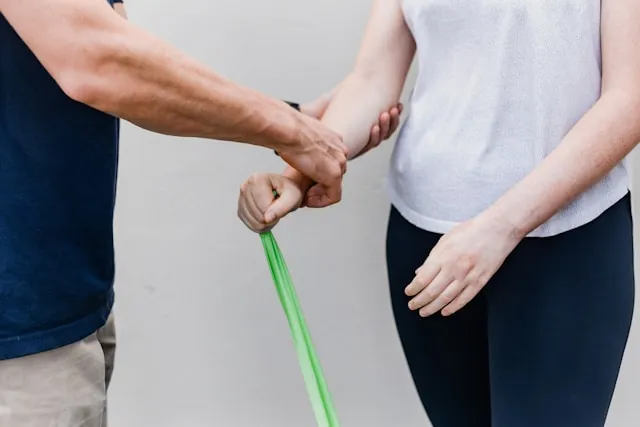
Assessment
A detailed history, then a thorough examination of movement, strength and the affected area. You leave knowing what is wrong, why it happened, and exactly what we are going to do about it.
Heel, ankle and Achilles pain almost always recover faster with progressive loading than with rest. We find and address the cause, then rebuild the foot and calf at our Soho, Liverpool Street and Marylebone clinics, so you walk and run comfortably again.

Overview
Foot and ankle pain covers a handful of load-related problems that usually improve by rebuilding the tissue's tolerance, not by resting it: plantar fasciitis (heel), Achilles tendinopathy, ankle sprains and metatarsalgia (pain across the ball of the foot). For the runners and commuters who walk miles across central London each week, it is rarely a sign of serious damage and usually responds well to the right loading plan.
Heel pain on your first steps of the morning, or an Achilles that grumbles after every run, is one of the most common reasons active adults seek physiotherapy, and most of it is mechanical and load-related, not a sign of serious damage. Heel, ankle and Achilles problems usually recover faster with progressive loading than with rest.
Most of what we see falls into a handful of load-related problems:
Usually not. The BJSM supports progressive loading for Achilles tendinopathy, NHS guidance favours loading and footwear advice for plantar heel pain, and structured rehab prevents recurrent ankle sprains. We confirm the cause, rule out the rare red flags, then rebuild around how you walk, run and train.
Because the Achilles is a tendinopathy that responds to graded load, we address the calf, foot and ankle deficits behind your pain through physiotherapy and sports rehab and coached strength training, and for runners we check how you load the foot with running gait analysis. We treat City professionals, runners and athletes across our Soho, Liverpool Street and Marylebone clinics. Self-referral; no GP letter needed.
Heel pain that bites on the first few steps of the day is typically plantar fasciitis, and it responds to calf and plantar-fascia loading, footwear advice and sensible load management. We confirm the diagnosis, then rebuild the capacity underneath it, so the morning walk stops being the worst part of your day.
Achilles tendinopathy recovers through progressive calf and tendon loading, the primary treatment supported by the BJSM consensus. We start where your tendon is today and progress over weeks, so it stops flaring the morning after every run.
An ankle sprain that is rested without rehabilitation often leaves weakness and poor balance behind, which is why so many people go on to repeated rolling and chronic instability. Structured strength, balance and proprioception work is what closes that door.
Metatarsalgia usually comes from forefoot overload: high-impact sport, prolonged standing or unsupportive footwear. We ease the aggravating load, address footwear, and strengthen the foot and calf so the forefoot can handle what your week asks of it.
Orthotics can help short term, but they rarely fix a load problem on their own. The durable answer is rebuilding the strength and tolerance of the foot, ankle and calf. Where footwear changes or temporary insoles help, we use them alongside the exercise plan.
Whether the goal is walking to work in comfort or a return to full mileage, we progress load week by week and judge the return on strength, balance and symptom response. You go back with confidence, and with the capacity to stay back.
Why it happens
A rapid spike in running mileage, walking, hiking or jumping load that outpaces what the foot and ankle can currently tolerate, the usual driver of plantar fasciitis and Achilles tendinopathy
Calf, foot and ankle strength and endurance deficits, so the plantar fascia, Achilles and forefoot absorb load they are not prepared for
A lateral ankle sprain that was not fully rehabilitated, leaving residual weakness, poor balance and a tendency to recurrent rolling and chronic instability
A sudden change in footwear, running surface or training pattern, including switching to minimalist shoes or harder ground, without an adaptation period
Forefoot overload from high-impact sport, prolonged standing or unsupportive footwear, the typical cause of metatarsalgia
Deconditioning after time off, illness or surgery, leaving the foot, ankle and calf under-prepared for return to activity

The assessment covers a detailed history and a thorough examination of movement, strength and the affected area. We explain what we find and agree a working diagnosis and plan you understand before you leave.
You go home with a written summary and a home-exercise programme built around your diagnosis and goals, so progress continues between visits.
Move better. Train stronger. Live fully. Pain relief that lasts is not enough on its own: we find the cause, then rebuild the strength behind the pain so it stays gone. No guesswork, no generic rehab.


Ready to optimise you? You can self-refer and book directly: no GP letter needed, and every new patient can start with a free 15-minute consultation call. The same fees apply across our Soho, Liverpool Street and Marylebone clinics.
Everything starts with finding the cause. Whether the goal is a marathon start line or a week at your desk without pain, we treat what is driving the problem, then build the strength that keeps it fixed.
A detailed history, then a thorough examination of movement, strength and the affected area. You leave knowing what is wrong, why it happened, and exactly what we are going to do about it.

Hands-on manual therapy combined with a progressive, tailored exercise programme. Sports massage, dry needling, shockwave or Reformer Pilates are added where they help your specific problem.

Coached, progressive strength work restores the load tolerance your body lost, paced to where you start. This is the stage that decides whether the fix lasts.

Each follow-up reassesses you against your baseline, with VALD testing where useful, so your return to work, sport or training rests on measured readiness. Discharge happens by mutual agreement when you can manage independently.

Treatment approach
Assessment first identifies which structure is driving your pain: plantar fascia, Achilles, the lateral ankle ligaments or the forefoot, and rules out the rare red flags, then delivers an individualised, progressive loading and balance programme, the first-line, best-evidenced approach across plantar fasciitis, Achilles tendinopathy and ankle sprains.
See treatment detail →For recalcitrant plantar fasciitis or Achilles tendinopathy that has not settled with first-line loading, extracorporeal shockwave therapy may be considered as an adjunct alongside continued rehabilitation, in line with NICE interventional procedures guidance; the evidence is mixed and it is never a substitute for progressive loading.
See treatment detail →FAQ
Active management is first-line. Calf and plantar-fascia stretching and progressive loading, footwear advice and managing your walking and running load relieve most plantar heel pain better than rest alone. We confirm the diagnosis, address the calf and foot strength deficits behind it, and guide your load week by week. Shockwave is reserved for stubborn cases that have not settled.
Tendon tissue adapts gradually, so recovery is rarely quick: often three months or more of consistent, progressive calf and tendon loading, the primary treatment supported by the BJSM consensus. We set realistic milestones and reassess regularly. Seek urgent advice if you suspect a sudden Achilles rupture: sharp pain, a palpable gap, and weakness pushing off.
It needs rehabilitation. An ankle sprain that is rested but not rehabilitated often leaves residual weakness and poor balance, which is why up to a third of people go on to recurrent rolling and chronic instability. Structured physiotherapy restoring strength, balance and proprioception is what prevents this, and it lets you return to sport with confidence rather than caution.
Sometimes they help in the short term, but they rarely fix the problem on their own. Most foot and ankle pain is load-related, so the lasting solution is rebuilding the strength and tolerance of the foot, ankle and calf. We may suggest footwear changes or temporary insoles alongside an exercise plan, but the strengthening is what makes the gains durable.
Often yes, in a modified way. Rather than stopping completely, we usually reduce the aggravating mileage and pace while you rebuild calf and foot capacity, so you keep some running rather than losing all your fitness. Your physiotherapist sets how much load is safe at each stage and progresses it as symptoms settle.
Seek prompt care if you cannot bear weight after an injury, if there is an obvious deformity or suspected fracture, or if you felt a sudden snap with sharp calf or heel pain and weakness pushing off, which can signal an Achilles rupture. A hot, swollen, red joint with feeling unwell needs urgent medical assessment, not physiotherapy first.
Get Started
Physio and Performance • 111 Charing Cross Road, Soho, London WC2H 0DT
Book NowAppointments typically available within 1–2 weeks