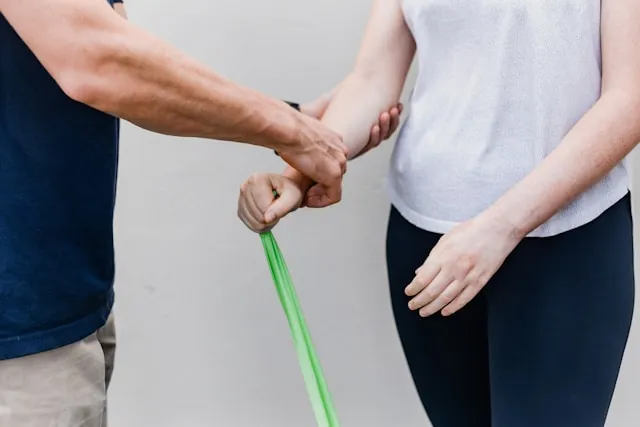
Assessment
A detailed history, then a thorough examination of movement, strength and the affected area. You leave knowing what is wrong, why it happened, and exactly what we are going to do about it.
Most hip and groin pain settles with the right loading, not rest or a rush to a scan, and pinpointing the source is what changes the plan. We work out where yours is really coming from, then build an exercise-led plan so you squat, run and change direction freely again.

Overview
Hip and groin pain is an umbrella term for discomfort around the hip joint, the groin or the outer hip, and it covers several distinct problems: hip impingement, gluteal tendinopathy, adductor-related groin pain and hip osteoarthritis. Naming yours correctly is the whole game, because each one responds to a different plan.
Pain at the front of the hip, deep in the groin or nagging over the outer hip is common in active adults, and the source matters because the treatment differs. These are different problems, but across nearly all of them an exercise-led approach beats rest or a rush to a scan. We see it constantly in runners and active professionals across central London, from marathon training that has ramped up too quickly to change-of-direction sport and long days at a desk.
Most hip and groin pain we see falls into four patterns:
That is the first thing we establish: the hip joint, the gluteal tendons, the groin or an early-arthritic joint. NICE (NG226) recommends exercise for osteoarthritis, the BJSM supports progressive loading for tendinopathy, and consensus favours rehabilitation before surgery for impingement and groin pain. We then build a graded plan around how you squat, run and load the hip.
We rebuild the gluteal, hip and trunk strength behind the problem through physiotherapy and sports rehab and coached strength training, treat outer-hip pain as the tendinopathy it usually is, and for runners we look at how you load the hip with running gait analysis. Every plan starts with a clear diagnosis and a movement target you care about, then progresses in stages until the hip meets it with capacity to spare. We treat professionals, runners and field-sport athletes across our Soho, Liverpool Street and Marylebone clinics. Self-referral; no GP letter needed.
Front of the hip, outer hip and groin are different problems with different plans. The assessment works out whether the joint, the gluteal tendons, the adductors or early arthritis is responsible, because everything that follows depends on getting that first call right. Name the source correctly and the rest of the plan follows.
Aching over the outer hip, worst lying on that side, is usually gluteal tendinopathy. Progressive loading of the gluteal muscles rebuilds the tendon while we strip out the compressive habits that aggravate it: crossed legs, hip-dropped standing, sleeping on the sore side. Most people get their nights back well before the daytime ache has fully gone.
For femoroacetabular impingement, international consensus favours a proper trial of rehabilitation first: building hip and trunk strength, control and movement. Many people settle well without an operation, and we refer for a surgical opinion only when conservative care has genuinely been given its chance.
NICE recommends therapeutic exercise as core treatment for hip osteoarthritis, whatever your age and whatever the scan shows. Graded strengthening reduces pain and protects function, and controlled Reformer work gives you a supported way to build that strength.
Groin pain that keeps returning in field-sport athletes usually means adductor and hip strength were never fully rebuilt. We load the area progressively and grade the return to sprinting, kicking and change of direction on strength, because rushing that step is why it recurs.
The programme is built around the movements you want back: deep squats, running, direction changes or simply sitting without the hip complaining. We progress load in stages and finish when the hip meets those demands, with capacity in reserve.
Why it happens
A rapid spike in running, sprinting, kicking or change-of-direction load that outpaces what the hip and groin can currently tolerate, the usual driver of adductor and gluteal overload
Strength and control deficits in the gluteal, hip and trunk muscles, so the hip joint, gluteal tendons and groin absorb load they are not prepared for
Repeated deep hip flexion, squatting or prolonged sitting that pinches the front of the hip in femoroacetabular impingement (FAI)
Compressive loading of the gluteal tendons: prolonged sitting cross-legged, standing with the hip dropped, or sleeping on the side, in gluteal tendinopathy
Age-related joint changes of hip osteoarthritis, which respond well to exercise rather than rest
Recovery after a groin strain, hip injury or hip surgery, where strength and load tolerance need rebuilding

The assessment covers a detailed history and a thorough examination of movement, strength and the affected area. We explain what we find and agree a working diagnosis and plan you understand before you leave.
You go home with a written summary and a home-exercise programme built around your diagnosis and goals, so progress continues between visits.
Move better. Train stronger. Live fully. Pain relief that lasts is not enough on its own: we find the cause, then rebuild the strength behind the pain so it stays gone. No guesswork, no generic rehab.


Ready to optimise you? You can self-refer and book directly: no GP letter needed, and every new patient can start with a free 15-minute consultation call. The same fees apply across our Soho, Liverpool Street and Marylebone clinics.
Everything starts with finding the cause. Whether the goal is a marathon start line or a week at your desk without pain, we treat what is driving the problem, then build the strength that keeps it fixed.
A detailed history, then a thorough examination of movement, strength and the affected area. You leave knowing what is wrong, why it happened, and exactly what we are going to do about it.

Hands-on manual therapy combined with a progressive, tailored exercise programme. Sports massage, dry needling, shockwave or Reformer Pilates are added where they help your specific problem.

Coached, progressive strength work restores the load tolerance your body lost, paced to where you start. This is the stage that decides whether the fix lasts.

Each follow-up reassesses you against your baseline, with VALD testing where useful, so your return to work, sport or training rests on measured readiness. Discharge happens by mutual agreement when you can manage independently.

Treatment approach
Assessment first identifies whether your pain is coming from the hip joint, the gluteal tendons, the groin or early osteoarthritis, then delivers an individualised, progressive loading and movement-retraining programme: the first-line, best-evidenced approach across FAI, gluteal tendinopathy, adductor-related groin pain and hip osteoarthritis.
See treatment detail →Reformer Pilates rebuilds controlled hip, gluteal and trunk strength under supported load: an exercise-based way to restore stability and movement confidence, useful for hip-impingement and osteoarthritis-related pain, consistent with the NICE NG226 emphasis on therapeutic exercise.
See treatment detail →FAQ
Outer hip pain is usually gluteal tendinopathy, and progressive loading of the gluteal muscles is first-line, supported by the BJSM consensus. A graded strengthening programme rebuilds the tendon's capacity while you reduce the compressive positions that aggravate it: sitting cross-legged, standing hip-dropped, lying on the painful side. Rest and repeated injection rarely give lasting relief alone.
Often not as the first step. International consensus on femoroacetabular impingement favours an individualised, progressive rehabilitation programme: improving hip and trunk strength, control and movement, before surgery. Many people settle well with physiotherapy. We refer for a surgical opinion only when conservative care has had a fair trial and not succeeded.
Yes. NICE guidance (NG226) recommends therapeutic exercise and self-management as core treatment for osteoarthritis, irrespective of age, ahead of imaging or surgery. Progressive strengthening reduces pain and improves function, and exercise is recommended even when arthritis shows on a scan. We build a plan around your hip and review your activity, weight and load.
It depends on severity and how well it is rehabilitated. A mild adductor strain may settle in a few weeks, while recurrent or longer-standing groin pain in field-sport athletes responds more gradually to a structured, progressive loading programme. We grade your return carefully, because rushing back before strength is restored is the commonest reason groin pain recurs.
Usually not as a first step. Findings like hip impingement or minor wear are common in people with no pain at all, so a scan rarely changes the plan early on. A hands-on assessment tells us where your pain is coming from and gets treatment started. We arrange imaging only when it would genuinely change what we do.
Seek urgent care after significant trauma or a fall, or if you cannot bear weight, which can signal a fracture, especially in older adults. A hot, swollen hip with feeling unwell and a fever can signal infection. Unexplained night pain, unexpected weight loss or a history of cancer also warrant prompt medical review rather than physiotherapy as the first step.
Get Started
Physio and Performance • 111 Charing Cross Road, Soho, London WC2H 0DT
Book NowAppointments typically available within 1–2 weeks