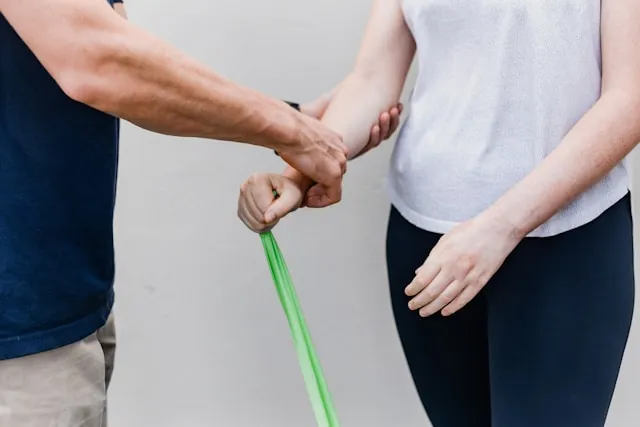
Assessment
A detailed history, then a thorough examination of movement, strength and the affected area. You leave knowing what is wrong, why it happened, and exactly what we are going to do about it.
Back pain and sciatica rarely need a scan, and most of it is non-specific. Exercise and hands-on therapy, in line with NICE NG59, settle the pain and rebuild a back you trust.

Overview
Low back pain is pain across the lower spine, the lumbar region, and in most cases it is non-specific: no single structure or serious disease is to blame. Sciatica is a specific pattern of leg pain, tingling or numbness that travels along the sciatic nerve, usually from an irritated or compressed lumbar nerve root. Both are common, both are usually mechanical, and both settle for most people without a scan, injections or surgery.
If back pain has you moving carefully and bracing for the next twinge, the reassuring news is that most episodes settle without a scan or a specialist referral. Low back pain is one of the most common reasons UK adults seek help, and we see it constantly in City desk workers and long commuters around our Liverpool Street clinic: hours at a screen, then a packed train, then a stiff, guarded lower back by Friday.
Most low back pain builds up when the load going through your spine outruns what it can currently handle, rather than from one dramatic injury. The common drivers fall into a few groups:
Stay active. NICE guideline NG59 recommends exercise, manual therapy and education as first-line care, and advises against routine imaging, opioids and prolonged bed rest. We rule out the rare red flags, explain what is happening in plain English, then build a plan around graded exercise and a confident return to work and training. Because a previous episode is the strongest predictor of the next, we rebuild the area with strength training and Reformer Pilates rather than just settling the current flare.
We treat professionals, parents and active people through physiotherapy and sports rehab across our Soho, Liverpool Street and Marylebone clinics, often alongside related problems such as sports injuries and tendinopathy. Self-referral; no GP letter needed.
Hands-on treatment and clear education calm the early, guarded phase, and we keep you as active as your pain reasonably allows. NICE guidance is clear that movement beats prolonged rest for both back pain and sciatica, so your plan is built around it from the first session.
Leg pain, tingling or numbness usually comes from an irritated nerve root, and most cases settle without surgery or injections. We explain what is happening in plain English, screen carefully for the rare red flags, and give you an honest projection at your first appointment.
Most low back pain is non-specific, and routine imaging rarely changes what happens next. We assess how your back moves and what your life loads onto it, then reserve scans for the few cases where something in your history or examination genuinely warrants one.
Graded strength work rebuilds the load tolerance of your lumbar spine and trunk, from controlled work on the Reformer through to coached strength training. The aim is a back that finishes this episode more capable than it started, so the next flare is smaller and rarer.
A previous episode is the strongest predictor of the next one. We look at the desk hours, commuting and lifting patterns behind your pain, adjust the loads that keep setting it off, and leave you with a short home programme you can actually keep doing.
Pregnancy and the postnatal period change how the lumbar spine and pelvis are loaded, and back pain in this window responds well to the right physiotherapy. Tell us when you book and we will pace the plan around the stage you are at.
Why it happens
Sustained postural loading: long desk hours, commuting or repetitive manual work
Sudden mechanical overload: lifting beyond current capacity or abrupt twisting under load
Irritation or compression of a lumbar nerve root, the usual driver of true sciatica
Deconditioning: reduced strength and movement after time off, illness or surgery
Pregnancy and the post-natal period, which alter how the lumbar spine and pelvis are loaded
Stress, poor sleep and low mood: well-evidenced amplifiers of pain perception
Recurrent flares from a long-standing weakness or an unhelpful movement pattern

The assessment covers a detailed history and a thorough examination of movement, strength and the affected area. We explain what we find and agree a working diagnosis and plan you understand before you leave.
You go home with a written summary and a home-exercise programme built around your diagnosis and goals, so progress continues between visits.
Move better. Train stronger. Live fully. Pain relief that lasts is not enough on its own: we find the cause, then rebuild the strength behind the pain so it stays gone. No guesswork, no generic rehab.


Ready to optimise you? You can self-refer and book directly: no GP letter needed, and every new patient can start with a free 15-minute consultation call. The same fees apply across our Soho, Liverpool Street and Marylebone clinics.
Everything starts with finding the cause. Whether the goal is a marathon start line or a week at your desk without pain, we treat what is driving the problem, then build the strength that keeps it fixed.
A detailed history, then a thorough examination of movement, strength and the affected area. You leave knowing what is wrong, why it happened, and exactly what we are going to do about it.

Hands-on manual therapy combined with a progressive, tailored exercise programme. Sports massage, dry needling, shockwave or Reformer Pilates are added where they help your specific problem.

Coached, progressive strength work restores the load tolerance your body lost, paced to where you start. This is the stage that decides whether the fix lasts.

Each follow-up reassesses you against your baseline, with VALD testing where useful, so your return to work, sport or training rests on measured readiness. Discharge happens by mutual agreement when you can manage independently.

Treatment approach
Combined assessment, education, manual therapy and progressive exercise is the NICE NG59 first-line treatment for both non-specific low back pain and sciatica.
See treatment detail →Reformer Pilates rebuilds controlled trunk and lower-limb strength under supported load: an exercise-based way to maintain movement and reduce flare-ups, consistent with the NICE NG59 emphasis on exercise.
See treatment detail →FAQ
Go to A&E or call 999 immediately if you develop loss of bladder or bowel control, numbness around the saddle or genital area, or progressive weakness in both legs. These can signal cauda equina syndrome: a rare emergency needing urgent imaging and surgery within hours. Also seek urgent care after significant trauma.
Usually not. NICE NG59 advises against routine imaging for non-specific low back pain and sciatica, because it rarely changes treatment and often shows incidental findings: disc bulges or mild degeneration, that are common in pain-free people. We reserve imaging for genuine red flags or symptoms suggesting a specific cause needing further investigation.
Stay as active as your pain reasonably allows. NICE NG59 advises against prolonged bed rest, which slows recovery and raises the risk of persistent problems. Walking, gentle movement and keeping to your normal routine where possible are recommended even during an acute flare. Your physiotherapist will guide what to modify and what you can safely keep doing.
Most sciatica improves over several weeks, and the majority resolve without surgery. With physiotherapy, an acute first episode of low back pain often settles within a handful of sessions, while recurrent or longer-standing pain responds more gradually over a longer course of structured exercise. Your physiotherapist will give you an honest, individual projection at your first appointment.
No. You can book directly with us as a private patient, with no GP letter or referral needed. This is called self-referral, and it means you can start assessment and treatment within days rather than waiting. If we spot anything that needs a GP or specialist, we will tell you and help you get there.
Usually yes, and staying at work tends to help recovery rather than harm it. Prolonged rest slows things down, so we help you break up long sitting, adjust your workstation and pace the day instead of stopping. For desk workers and commuters, small changes to how you sit and travel in often take the edge off the daily flare.
Get Started
Physio and Performance • 111 Charing Cross Road, Soho, London WC2H 0DT
Book NowAppointments typically available within 1–2 weeks