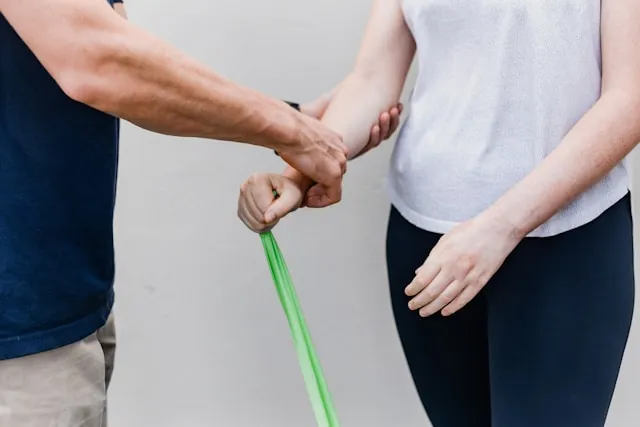
Assessment
A detailed history, then a thorough examination of movement, strength and the affected area. You leave knowing what is wrong, why it happened, and exactly what we are going to do about it.
Performance testing in London that swaps guesswork for hard numbers, using VALD force plates and dynamometry to measure exactly how much force you produce and how evenly you share it left to right, giving you a clear baseline and an evidence-led steer on when to progress load or return to sport.


The assessment covers a detailed history and a thorough examination of movement, strength and the affected area. We explain what we find and agree a working diagnosis and plan you understand before you leave.
You go home with a written summary and a home-exercise programme built around your diagnosis and goals, so progress continues between visits.
Force plates and dynamometry quantify how much force you produce and how quickly, so decisions rest on numbers rather than how a movement looks or feels.
Testing shows how evenly force is shared between your sides, exposing the imbalances that hold back performance or raise your risk of re-injury.
After injury or surgery, measured readiness rather than symptoms alone steers the late stages of rehab, so you go back when the data says you are ready.
Repeat testing across a rehab or training block shows real change over time, so you can see what is paying off and adjust what is not.
Your results feed straight into your physiotherapy and strength programme, turning a clear baseline into a targeted plan for progressing load.

Ready to optimise you? You can self-refer and book directly: no GP letter needed, and every new patient can start with a free 15-minute consultation call. The same fees apply across our Soho, Liverpool Street and Marylebone clinics.
Everything starts with finding the cause. Whether the goal is a marathon start line or a week at your desk without pain, we treat what is driving the problem, then build the strength that keeps it fixed.
A detailed history, then a thorough examination of movement, strength and the affected area. You leave knowing what is wrong, why it happened, and exactly what we are going to do about it.

Hands-on manual therapy combined with a progressive, tailored exercise programme. Sports massage, dry needling, shockwave or Reformer Pilates are added where they help your specific problem.

Coached, progressive strength work restores the load tolerance your body lost, paced to where you start. This is the stage that decides whether the fix lasts.

Each follow-up reassesses you against your baseline, with VALD testing where useful, so your return to work, sport or training rests on measured readiness. Discharge happens by mutual agreement when you can manage independently.
Move better. Train stronger. Live fully. Pain relief that lasts is not enough on its own: we find the cause, then rebuild the strength behind the pain so it stays gone. No guesswork, no generic rehab.


Written and medically reviewed by Sam Harvey, Physiotherapist & Clinical Lead · HCPC-registered · 15 Years’ Experience · Health and Care Professions Council (HCPC) and Chartered Society of Physiotherapy (CSP).
FAQ
VALD is a suite of objective testing technology. Force plates (ForceDecks) measure how much force you produce in jumps and presses, while dynamometry (ForceFrame, NordBord) measures isolated muscle strength. Together they quantify your strength, left-to-right asymmetry and rate of force development: numbers that guide rehab and performance decisions rather than treat anything directly.
It is an assessment, not a treatment. Testing measures and informs. It does not itself rehabilitate an injury or build strength. The results feed into your physiotherapy, strength training or return-to-sport plan, giving your clinician objective data to set load, track progress and judge when you are genuinely ready to progress.
It informs that decision rather than making it alone. Sports-medicine consensus recommends objective strength and symmetry criteria, not time or symptoms only, for late-stage return-to-sport calls. VALD supplies those numbers, such as limb symmetry after an ACL reconstruction, which your clinician weighs against your history, sport and movement quality.
No. Performance testing suits anyone who wants proof rather than guesswork: weekend runners, lifters, office workers returning from injury, and competitive athletes alike. The numbers give you a personal baseline to train against and to measure progress from, whatever your starting point, at any of our central London clinics.
Wear comfortable training clothing and supportive trainers, and treat it like a training day. Avoid heavy or unfamiliar exercise in the 24 to 48 hours beforehand so your output reflects true capacity rather than fatigue. Be well hydrated and fed, and tell us about any current pain or injury before we begin.
Testing earns its value on repetition, because the change between tests is what matters. We typically retest at the end of a rehabilitation phase or training block, often every four to eight weeks, so improvements in strength and symmetry are visible. We agree a sensible retest interval with you based on your goal.
Get Started
Physio and Performance • 111 Charing Cross Road, Soho, London WC2H 0DT
Book NowAppointments typically available within 1–2 weeks