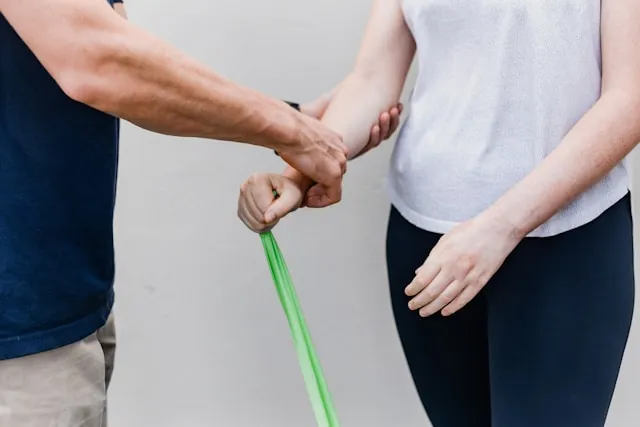
Assessment
A detailed history, then a thorough examination of movement, strength and the affected area. You leave knowing what is wrong, why it happened, and exactly what we are going to do about it.
Good post-surgical rehabilitation turns a successful operation into a full recovery: surgery repairs the structure, rehab rebuilds the strength and confidence around it. Across our three London clinics, plus home visits where travel is hard, we run a staged, surgeon-aligned programme that returns you to work, sport and daily life on milestones, not the calendar.

Overview
Post-surgical rehabilitation is the planned, progressive recovery programme that follows an orthopaedic operation, and it is one of the biggest factors in your final outcome. The operation is only half the job: surgery repairs the structure, and rehabilitation rebuilds the strength, movement and confidence around it. We guide recovery after ACL reconstruction, joint replacement, rotator-cuff repair and other orthopaedic and arthroscopic surgery, both in the clinic and, when getting to us is hard in the early weeks, through home visits across London.
The operations we most often rehabilitate include:
Because the outcome depends on what you rebuild afterwards. We work within your surgeon's protocol and progress you by meeting strength, range and control milestones, not by the calendar. For ACL in particular, the consensus is clear: objective return-to-sport testing before pivoting, because rushing back is a leading cause of re-injury.
Recovery runs through structured post-operative rehab and coached strength training to rebuild what surgery cannot give back, with objective strength testing guiding return-to-sport decisions, and it is a common route back after knee pain and ACL injury. In the early weeks, when travelling is tiring or awkward on crutches, we can bring that rehab to you at home and step it up as you get moving. We support people returning to work, exercise and sport across our Soho, Liverpool Street and Marylebone clinics. Self-referral; we are happy to liaise with your surgeon.
The first phase is careful by design: controlling swelling, restoring gentle range and protecting what the surgeon has fixed, always within their protocol and precautions. Starting early, often within days, is what stops stiffness and muscle loss taking hold. Get these first weeks right and every later phase is easier.
Your programme is built around your operation and your consultant's guidance, and with your consent we liaise with the surgical team directly: sharing findings and progress so everyone is pulling in the same direction. Techniques and timelines vary, so no two programmes are identical.
You move to the next phase by meeting strength, range and control criteria, and only then. A staged programme that respects healing while it keeps demanding a little more is what separates a good surgical outcome from a disappointing one.
An operation repairs the structure; it does not return the muscle lost to injury, rest and the procedure itself. Coached, progressive strength work is the engine of the later phases, restoring the capacity your knee, hip or shoulder needs for real life. That is the difference between a limb that works and one you still favour a year on.
After ACL reconstruction the consensus is clear: objective return-to-sport testing before pivoting, because going back on time alone is a leading cause of re-injury. VALD force-plate and dynamometry testing measures your strength and symmetry, so the decision rests on evidence.
Hesitation and guarding often outlast the tissue healing. The graded programme rebuilds trust in the limb alongside its strength, taking you from protected early movement to walking, stairs, work and sport without thinking about it. That is when rehabilitation is finished.
Why it happens
Recovery after anterior cruciate ligament (ACL) reconstruction, where range, quadriceps and hamstring strength, control and confidence must be progressively rebuilt before a return to pivoting sport
Recovery after hip or knee joint replacement, where range of movement, strength and walking pattern are restored in a staged programme
Recovery after rotator-cuff repair or other shoulder surgery, where protected early motion is followed by progressive strengthening within the surgeon's precautions
Recovery after other orthopaedic or arthroscopic procedures, including tendon repairs, fracture fixation and meniscal surgery, where strength and load tolerance need rebuilding
Deconditioning, swelling, stiffness and loss of strength that follow any period of post-operative rest and reduced activity
Loss of movement confidence and altered movement patterns after surgery, which a graded, supervised programme is designed to restore

The assessment covers a detailed history and a thorough examination of movement, strength and the affected area. We explain what we find and agree a working diagnosis and plan you understand before you leave.
You go home with a written summary and a home-exercise programme built around your diagnosis and goals, so progress continues between visits.
Move better. Train stronger. Live fully. Pain relief that lasts is not enough on its own: we find the cause, then rebuild the strength behind the pain so it stays gone. No guesswork, no generic rehab.


Ready to optimise you? You can self-refer and book directly: no GP letter needed, and every new patient can start with a free 15-minute consultation call. The same fees apply across our Soho, Liverpool Street and Marylebone clinics.
Everything starts with finding the cause. Whether the goal is a marathon start line or a week at your desk without pain, we treat what is driving the problem, then build the strength that keeps it fixed.
A detailed history, then a thorough examination of movement, strength and the affected area. You leave knowing what is wrong, why it happened, and exactly what we are going to do about it.

Hands-on manual therapy combined with a progressive, tailored exercise programme. Sports massage, dry needling, shockwave or Reformer Pilates are added where they help your specific problem.

Coached, progressive strength work restores the load tolerance your body lost, paced to where you start. This is the stage that decides whether the fix lasts.

Each follow-up reassesses you against your baseline, with VALD testing where useful, so your return to work, sport or training rests on measured readiness. Discharge happens by mutual agreement when you can manage independently.

Treatment approach
A staged, criteria-based rehabilitation programme, working within your surgeon's protocol, restores range of movement, manages swelling, then progressively rebuilds strength, control and function, the core of recovery after ACL reconstruction, joint replacement, rotator-cuff and other orthopaedic surgery.
See treatment detail →Objective VALD force-plate and dynamometry testing measures strength, asymmetry and readiness, so return-to-activity and return-to-sport decisions after surgery are made on evidence and criteria rather than time alone: the consensus standard before returning to pivoting sport after ACL reconstruction.
See treatment detail →FAQ
Usually soon, often within days, but always within your surgeon's protocol and precautions. Early rehabilitation focuses on protecting the repair, controlling swelling and restoring gentle range, then progresses to strengthening as healing allows. We work from your surgeon's guidance and are happy to liaise with them, so recovery is safe at every stage and never rushed.
Recovery is staged and individual, and most guidance describes a return to pivoting sport around nine to twelve months, sometimes longer. Best practice is criteria-based: you progress by meeting strength, control and movement milestones, and we use objective return-to-sport testing before clearing pivoting sport, because returning too early on time alone is a leading cause of re-injury.
Surgery replaces the joint, but rehabilitation restores the range, strength and walking pattern that make it work for you. A structured, progressive programme reduces stiffness, rebuilds the muscle lost around the joint and returns you to walking, stairs and daily activity with confidence. Skipping or rushing rehabilitation is why some people never feel the full benefit of their operation.
Yes. We work within your surgeon's specific post-operative protocol and precautions, and we are happy to liaise with them directly where helpful. Surgical techniques and timelines vary, so your programme is built around your operation and consultant's guidance, then progressed by criteria as you meet each strength, range and control milestone.
Yes. In the early weeks after an operation, getting across London on crutches or in a sling is often the hardest part, so we can bring your rehab to you with home visits. We cover the early, protective work at home, then move you into the clinic and gym as you get steadier and stronger.
Contact your surgical team or seek urgent care if you have a fever, increasing redness, heat or discharge from the wound, calf pain or swelling that could signal a clot, sudden severe pain, or a feeling that something has given way. These need urgent medical review rather than physiotherapy, and we will always direct you back to your surgical team.
Get Started
Physio and Performance • 111 Charing Cross Road, Soho, London WC2H 0DT
Book NowAppointments typically available within 1–2 weeks