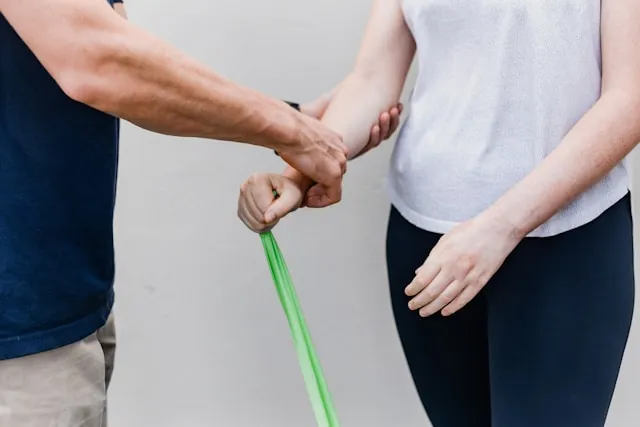
Assessment
A detailed history, then a thorough examination of movement, strength and the affected area. You leave knowing what is wrong, why it happened, and exactly what we are going to do about it.
Physiotherapy in central London that moves you from pain to performance, with Sam Harvey giving you a clear diagnosis, hands-on treatment and progressive rehab across our three clinics, so back, neck, shoulder and joint pain settles and the strength behind it is rebuilt.


The assessment covers a detailed history and a thorough examination of movement, strength and the affected area. We explain what we find and agree a working diagnosis and plan you understand before you leave.
You go home with a written summary and a home-exercise programme built around your diagnosis and goals, so progress continues between visits.
We find what is actually driving the pain, ease it with hands-on treatment, and give you a clear plan so it settles for good rather than flaring up again.
From a rolled ankle to a stubborn Achilles, we diagnose it accurately and load it progressively so the tissue rebuilds the capacity your sport demands.
Coached, progressive rehab restores the strength, range and confidence you lost, with every exercise shown to you so your technique stays right between visits.
We look at how you move, work and train, so we treat what is really driving the problem instead of chasing the pain around your body.
Rehab is built toward clear return-to-sport benchmarks, not fixed dates, so you go back when your body is genuinely ready to handle the load.

Ready to optimise you? You can self-refer and book directly: no GP letter needed, and every new patient can start with a free 15-minute consultation call. The same fees apply across our Soho, Liverpool Street and Marylebone clinics.
Everything starts with finding the cause. Whether the goal is a marathon start line or a week at your desk without pain, we treat what is driving the problem, then build the strength that keeps it fixed.
A detailed history, then a thorough examination of movement, strength and the affected area. You leave knowing what is wrong, why it happened, and exactly what we are going to do about it.

Hands-on manual therapy combined with a progressive, tailored exercise programme. Sports massage, dry needling, shockwave or Reformer Pilates are added where they help your specific problem.

Coached, progressive strength work restores the load tolerance your body lost, paced to where you start. This is the stage that decides whether the fix lasts.

Each follow-up reassesses you against your baseline, with VALD testing where useful, so your return to work, sport or training rests on measured readiness. Discharge happens by mutual agreement when you can manage independently.
Move better. Train stronger. Live fully. Pain relief that lasts is not enough on its own: we find the cause, then rebuild the strength behind the pain so it stays gone. No guesswork, no generic rehab.


Written and medically reviewed by Sam Harvey, Physiotherapist & Clinical Lead · HCPC-registered · 15 Years’ Experience · Health and Care Professions Council (HCPC) and Chartered Society of Physiotherapy (CSP).
FAQ
No. UK physiotherapists are first-contact practitioners, so you can self-refer and book directly with us: no GP letter is needed. If you are claiming on private health insurance, your insurer may require a GP referral first, so check your policy. We also offer a free 15-minute consultation call before booking.
For most non-specific low back pain, yes. NICE guideline NG59 recommends exercise, manual therapy and education as first-line care, and advises against routine imaging, opioids and prolonged bed rest. We assess you, rule out red flags, and build a progressive plan. Persistent or worsening symptoms are reviewed and referred onward where appropriate.
Most acute injuries settle within three to six sessions over four to eight weeks. Longer-standing problems, such as chronic low back pain, recurring tendinopathy or post-operative rehabilitation, typically need more. We discuss a realistic course at your first appointment and reassess every visit. We will not recommend sessions you do not need.
Wear loose, comfortable clothing that lets us assess and move the affected area: shorts for lower-limb problems, a vest top for shoulder or neck issues. Bring any relevant scan or test results, insurer details if applicable, and a list of any medications you take. Private treatment rooms are available at all our clinics.
Yes. Sam Harvey has worked in elite sport, including Cork City FC and Munster Rugby, and rehabilitation here is built toward graded return-to-sport criteria rather than fixed dates. We restore range, strength and load tolerance, then progress sport-specific demands. Return is guided by objective benchmarks and how your body responds, in line with current best practice.
Usually not. Most muscle and joint pain is diagnosed clinically from your history and a physical assessment, and current UK guidance advises against routine imaging for common problems like non-specific low back pain. If your presentation suggests a scan is genuinely needed, we will tell you and help arrange the right referral.
Get Started
Physio and Performance • 111 Charing Cross Road, Soho, London WC2H 0DT
Book NowAppointments typically available within 1–2 weeks