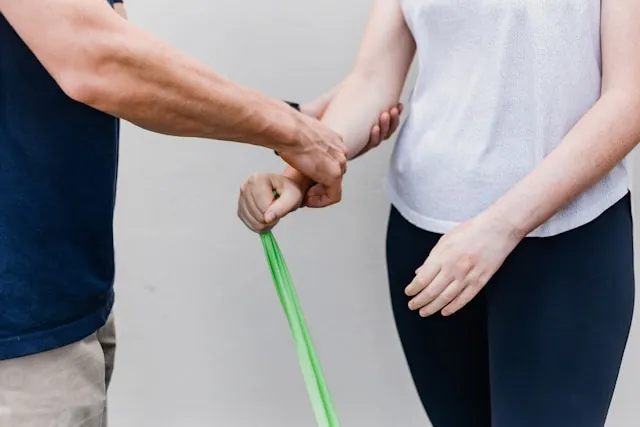
Assessment
A detailed history, then a thorough examination of movement, strength and the affected area. You leave knowing what is wrong, why it happened, and exactly what we are going to do about it.
Most cycling injuries are overuse and bike-position problems, not damage. We rebuild the capacity behind your knee, back or hand pain so you ride pain-free again.

Overview
Cycling spares the joints from impact but loads them in a sustained, repetitive position, so its injuries are overwhelmingly overuse and position-related rather than traumatic. Load and bike position, not damage, are usually what drives the pain.
Often both, and we treat them together. NICE and BJSM support graded loading and relative rest as first-line care, so you rarely need a scan. We rebuild knee, hip and postural capacity and flag the saddle, reach or cleat factors a bike fit can address.
We treat commuters, road cyclists and indoor riders across our Soho, Liverpool Street and Marylebone clinics. Self-referral; no GP letter needed.
Why it happens
Pedalling volume, gear and cadence choices and saddle or cleat position that load the front of the knee: the driver of cyclist's anterior knee pain
Sustained flexed riding posture over long rides, irritating the low back and neck when postural capacity is limited
Prolonged handlebar pressure compressing the ulnar or median nerve, producing handlebar palsy in the hands
Bike-fit factors: saddle height, reach, cleat position and bar setup, that concentrate load on one region
A spike in riding volume or intensity without a gradual build-up, the classic overuse trigger
Strength, mobility or control deficits in the knee, hip, trunk and neck that leave tissue under-prepared for sustained load
Anterior knee pain in cyclists is usually patellofemoral, driven by pedalling volume, gearing and position factors, with hip and thigh strength deficits underneath. We rebuild the strength and control around the knee and flag the saddle and cleat factors concentrating load on it.
Load and position drive most cycling pain, and they usually work together. We treat the capacity side: strength, mobility, control, and tell you plainly which saddle, reach or cleat factors deserve a professional bike fit. A fit holds far better on a stronger body.
A sustained flexed position asks a lot of the spine's postural muscles, and long rides expose the shortfall. Graded strengthening, with controlled Reformer work for trunk capacity, builds the endurance that lets the last hour feel like the first.
Tingling or weak hands after long rides is usually handlebar palsy: nerve compression from sustained pressure, and it is generally reversible. We advise on hand position, padding and bar setup, and screen for the other nerve causes that need a medical look.
Most cycling injuries respond to adjusted volume, intensity and position rather than time off the bike. We set a level the tissue tolerates, keep you commuting or training indoors where it helps, and progress the riding as capacity comes back.
The test of the plan is not one comfortable spin: it is the sportive, the tour, the biggest week of the season. We finish the programme at that demand, with the strength, position habits and load management to keep the problem behind you.

The assessment covers a detailed history and a thorough examination of movement, strength and the affected area. We explain what we find and agree a working diagnosis and plan you understand before you leave.
You go home with a written summary and a home-exercise programme built around your diagnosis and goals, so progress continues between visits.
From pain to performance. Pain relief that lasts is not enough on its own: we rebuild the strength behind the pain so it stays gone.


You can self-refer and book directly: no GP letter needed, and every new patient can start with a free 15-minute consultation call. The same fees apply across our Soho, Liverpool Street and Marylebone clinics.
Everything starts with finding the cause. Whether the goal is a marathon start line or a week at your desk without pain, we treat what is driving the problem, then build the strength that keeps it fixed.
A detailed history, then a thorough examination of movement, strength and the affected area. You leave knowing what is wrong, why it happened, and exactly what we are going to do about it.

Hands-on manual therapy combined with a progressive, tailored exercise programme. Sports massage, dry needling, shockwave or Reformer Pilates are added where they help your specific problem.

Coached, progressive strength work restores the load tolerance your body lost, paced to where you start. This is the stage that decides whether the fix lasts.

Each follow-up reassesses you against your baseline, with VALD testing where useful, so your return to work, sport or training rests on measured readiness. Discharge happens by mutual agreement when you can manage independently.

Treatment approach
Sports physiotherapy is the core treatment: accurate diagnosis of the knee, low-back, neck or hand problem, a graded loading and rehabilitation plan, and clear flagging of the position factors a professional bike fit can address, with a criteria-based return to full riding.
See treatment detail →Targeted strength and mobility work rebuilds the knee, hip, trunk and postural capacity that sustained riding demands, addressing the deficits behind cyclist's knee and the back and neck pain of long rides and reducing recurrence.
See treatment detail →Reformer Pilates builds the core strength, control and mobility that support a sustained, flexed riding posture, helping ease the low-back and neck load of long rides and complementing the physiotherapy plan for position-related cycling pain.
See treatment detail →FAQ
Anterior knee pain in cyclists is usually patellofemoral pain, driven by pedalling volume and position factors such as saddle height and cleat setup, often with hip and thigh strength deficits. Treatment rebuilds the strength and control around the knee and flags the bike-fit factors concentrating load on it. Rest alone rarely fixes a position-related problem.
Handlebar palsy is numbness, tingling or weakness in the hand from prolonged handlebar pressure compressing the ulnar or median nerve. It is usually reversible with changes to hand position, padding, bar setup and ride duration. We assess and advise, but persistent or worsening numbness warrants medical review to rule out other nerve causes.
Often it is part of the answer. Saddle height, reach, cleat position and bar setup strongly influence how load is shared across the knee, back, neck and hands, so a professional fit frequently helps position-related pain. But fit works best alongside rehabilitation: addressing underlying strength or mobility deficits is what makes a fit hold.
Usually not. Most cycling injuries respond better to adjusted load and position than to complete rest, which only deconditions the tissue. We typically reduce volume or intensity, modify position factors and address the underlying deficits to a level the tissue tolerates, then build back up your riding gradually.
Get Started
Physio and Performance • 111 Charing Cross Road, Soho, London WC2H 0DT
BookAppointments typically available within 1–2 weeks