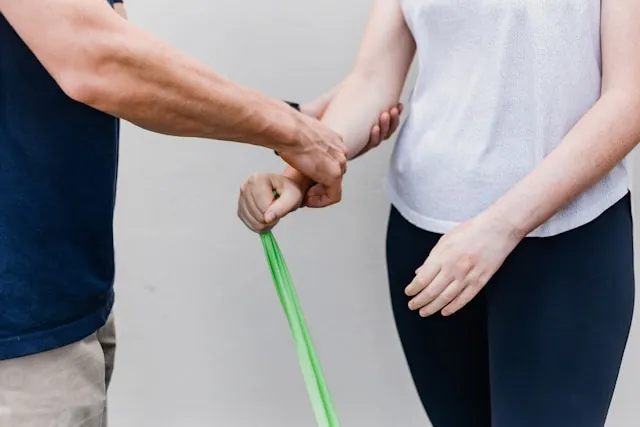
Assessment
A detailed history, then a thorough examination of movement, strength and the affected area. You leave knowing what is wrong, why it happened, and exactly what we are going to do about it.
From shoulders to knees to hamstrings, we diagnose accurately and rebuild the strength and contact tolerance you need for a criteria-based return to play.

Overview
Rugby combines high-force collisions with high-speed running, so its injuries reflect both: shoulders from tackling, knee ligaments from twisting and contact, and calf and hamstring strains from sprinting. Some are sudden and traumatic; others build from accumulated load and strength deficits.
When measured criteria say so, not the calendar. We screen for injuries needing referral or imaging, then follow NICE and BJSM criteria-based recovery: graded loading that rebuilds capacity and restores your sprint and collision tolerance. Suspected concussion is referred for medical assessment under recognised protocols, not treated here.
We treat grassroots, club and returning players across our Soho, Liverpool Street and Marylebone clinics. Self-referral; no GP letter needed.
Why it happens
Tackling and landing on the point of the shoulder, the classic mechanism for AC-joint injuries and dislocations
Twisting, awkward plants and contact at the knee, injuring the cruciate and collateral ligaments
High-speed sprinting and rapid acceleration that strain the calf and hamstring
Repeated collisions and accumulated contact load across a season, raising overall injury risk
Strength and control deficits in the shoulder, knee, hamstring and trunk that leave tissue under-prepared for contact
A return to contact before full rehabilitation, or a spike in match and training load without a build-up
Landing on the point of the shoulder is how most AC-joint injuries happen, and most recover without surgery: protection first, then progressive strengthening of the shoulder and shoulder blade. The programme ends at contact tolerance, because that is what the game will test.
A twist or tackle that leaves the knee swollen or giving way needs an accurate diagnosis before any decisions. We assess, refer on where warranted, and rehabilitate with or without reconstruction, staged against strength and control criteria throughout.
Sprint-driven strains come back when strength is only partly rebuilt. We restore the muscle through progressive loading, including the eccentric hamstring work well evidenced for cutting recurrence, and clear you for full-speed running on measured strength, never on a date.
Concussion is a medical matter and we treat it as one. Suspected head injuries are referred for medical assessment and a recognised graduated return-to-play protocol. What we own is the rest of your body while that process runs its course.
Rugby asks the body to absorb collisions and produce sprints in the same afternoon. Structured strength work across shoulder, trunk, hip and hamstring builds the capacity that both demand, which is the best protection against the accumulated load of a season.
VALD force-plate and dynamometry testing measures the strength and symmetry behind a safe return to collisions and full-speed rugby. Residual deficits show in the numbers before they show in a ruck, so re-injury risk is managed rather than gambled on.

The assessment covers a detailed history and a thorough examination of movement, strength and the affected area. We explain what we find and agree a working diagnosis and plan you understand before you leave.
You go home with a written summary and a home-exercise programme built around your diagnosis and goals, so progress continues between visits.
From pain to performance. Pain relief that lasts is not enough on its own: we rebuild the strength behind the pain so it stays gone.


You can self-refer and book directly: no GP letter needed, and every new patient can start with a free 15-minute consultation call. The same fees apply across our Soho, Liverpool Street and Marylebone clinics.
Everything starts with finding the cause. Whether the goal is a marathon start line or a week at your desk without pain, we treat what is driving the problem, then build the strength that keeps it fixed.
A detailed history, then a thorough examination of movement, strength and the affected area. You leave knowing what is wrong, why it happened, and exactly what we are going to do about it.

Hands-on manual therapy combined with a progressive, tailored exercise programme. Sports massage, dry needling, shockwave or Reformer Pilates are added where they help your specific problem.

Coached, progressive strength work restores the load tolerance your body lost, paced to where you start. This is the stage that decides whether the fix lasts.

Each follow-up reassesses you against your baseline, with VALD testing where useful, so your return to work, sport or training rests on measured readiness. Discharge happens by mutual agreement when you can manage independently.

Treatment approach
Sports physiotherapy is the core treatment: accurate diagnosis of the shoulder, knee, calf or hamstring injury, onward referral or imaging where needed, and a graded, criteria-based rehabilitation plan that restores contact and sprint tolerance before return to play.
See treatment detail →Structured strength work rebuilds shoulder, knee, hamstring and trunk capacity: the deficits behind most rugby injuries, and the robustness needed to absorb collisions, with eccentric hamstring work well evidenced for reducing strain recurrence.
See treatment detail →VALD force-plate and dynamometry testing measures strength and left-to-right asymmetry to guide return-to-contact decisions on objective criteria rather than the calendar, and to flag the residual deficits that drive re-injury.
See treatment detail →FAQ
Most AC-joint injuries from tackling and falls are managed without surgery through protection then progressive rehabilitation to rebuild shoulder and scapular strength and control. Higher-grade separations occasionally need a surgical opinion. Treatment restores the strength and contact tolerance to tackle safely, and return is judged on measured criteria rather than feel.
Not always, but many rugby players returning to contact and pivoting choose reconstruction, particularly with associated meniscal or other ligament damage. Some injuries are managed without surgery. The decision depends on your knee, your goals and a specialist opinion. Whichever path, progressive, criteria-based rehabilitation to rebuild strength, control and contact readiness is central to a confident, durable return.
Concussion is a medical matter, not a physiotherapy one. If you have a head injury with confusion, headache, dizziness, nausea or memory problems, stop playing immediately and seek medical assessment. Return to play follows a recognised graduated protocol overseen by medical professionals. We refer suspected concussion on rather than treating it ourselves.
Seek urgent care if you cannot bear weight, a joint gives way or looks deformed, a shoulder is clearly out of place, or you have numbness, tingling or a cold, discoloured limb. Any head injury with confusion or loss of consciousness needs assessment. For these, attend A&E or contact NHS 111; physiotherapy follows once the acute injury has been assessed.
Get Started
Physio and Performance • 111 Charing Cross Road, Soho, London WC2H 0DT
BookAppointments typically available within 1–2 weeks