Assessment
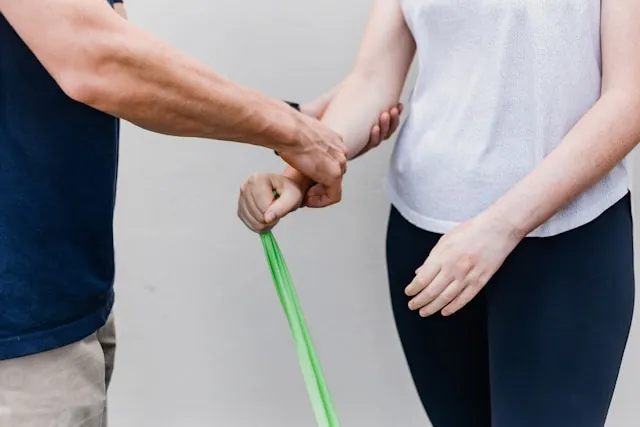
A detailed history, then a thorough examination of movement, strength and the affected area. You leave knowing what is wrong, why it happened, and exactly what we are going to do about it.
Rowing injuries are overwhelmingly overuse, not acute. We rebuild back, rib, wrist and knee capacity and judge your return to full rowing on objective markers.

Overview
Almost all rowing injuries are overuse problems that build over thousands of strokes rather than from one bad pull. That is good news, because overuse responds far better to a smart, graded loading plan than to rest, which only lets the tissue lose capacity.
For these presentations NICE and BJSM support graded loading and relative rest as first-line care, so you rarely need a scan. We rebuild whatever is complaining, review your training load and stroke mechanics, and judge your return on objective markers. Focal rib pain is the exception we screen carefully, as it can signal bone stress.
We treat club, masters and indoor rowers across our Soho, Liverpool Street and Marylebone clinics. Self-referral; no GP letter needed.
Why it happens
Repeated loaded flexion-and-extension of the lumbar spine through the drive, the dominant load on a rower's lower back
High-volume repetitive pull of the muscles attaching to the ribs, the mechanism behind rowing-specific rib stress fractures
Feathering, squaring and gripping the handle, irritating the wrist and forearm tendons
Deep knee compression at the catch position, which can load the patellofemoral joint
A sudden increase in erg or on-water volume, or fatigue that lets technique deteriorate under load
Strength and control deficits in the back, hip, trunk and forearm that leave tissue under-prepared for stroke volume
The drive loads the lower back through flexion and extension under tension, stroke after stroke, and it is the region rowers injure most. We settle the flare, rebuild back, hip and trunk capacity, and review the training volume and technique factors that let it build.
Rib stress fractures are a rowing-specific injury, and focal rib pain that worsens with rowing or deep breathing gets treated with respect. We screen for bone stress before loading anything, because this is the one rowing problem that needs genuine offloading first.
Feathering, squaring and gripping the handle load the forearm tendons through thousands of small repetitions. Graded loading rebuilds their capacity while we adjust the aggravating volume, so the wrist stops dictating which sessions you can complete.
Deep compression at the catch can stir up the patellofemoral joint, especially when volume climbs. We strengthen the quadriceps, gluteal and hip muscles that control the knee, so it tolerates the front of the slide as well as the finish.
Most rowing injuries respond to adjusted load rather than a full stop. We modify volume, stroke rate or pressure to what the tissue tolerates and keep the rest of your training going, building back to full sessions as capacity returns.
Stroke volume comes back in stages, judged on strength, symptom response and how the tissue handles each step, with VALD testing where useful. Technique that survives fatigue is part of the goal, because most rowing injuries arrive late in the session.

The assessment covers a detailed history and a thorough examination of movement, strength and the affected area. We explain what we find and agree a working diagnosis and plan you understand before you leave.
You go home with a written summary and a home-exercise programme built around your diagnosis and goals, so progress continues between visits.
From pain to performance. Pain relief that lasts is not enough on its own: we rebuild the strength behind the pain so it stays gone.


You can self-refer and book directly: no GP letter needed, and every new patient can start with a free 15-minute consultation call. The same fees apply across our Soho, Liverpool Street and Marylebone clinics.
Everything starts with finding the cause. Whether the goal is a marathon start line or a week at your desk without pain, we treat what is driving the problem, then build the strength that keeps it fixed.
A detailed history, then a thorough examination of movement, strength and the affected area. You leave knowing what is wrong, why it happened, and exactly what we are going to do about it.

Hands-on manual therapy combined with a progressive, tailored exercise programme. Sports massage, dry needling, shockwave or Reformer Pilates are added where they help your specific problem.

Coached, progressive strength work restores the load tolerance your body lost, paced to where you start. This is the stage that decides whether the fix lasts.

Each follow-up reassesses you against your baseline, with VALD testing where useful, so your return to work, sport or training rests on measured readiness. Discharge happens by mutual agreement when you can manage independently.

Treatment approach
Sports physiotherapy is the core treatment: accurate diagnosis of the back, rib, wrist or knee problem, screening for bone stress where focal rib pain is present, and a graded loading and technique-aware rehabilitation plan with a criteria-based return to full rowing.
See treatment detail →Targeted strength work rebuilds the back, hip, trunk and forearm capacity the rowing stroke demands, addressing the deficits that let the lumbar spine and other regions absorb more than their share and reducing the recurrence overuse injuries are prone to.
See treatment detail →VALD testing gives objective strength and left-to-right asymmetry data across the chain to guide a measured, criteria-based return to full stroke volume and to flag the deficits that drive a rower's recurrent low-back or rib problems.
See treatment detail →FAQ
The rowing stroke repeatedly loads the lower back through flexion and extension under tension, and it is the region rowers injure most. The risk rises when stroke volume outpaces what the back can handle, or when fatigue lets technique deteriorate. Treatment rebuilds back, hip and trunk capacity and reviews training load and technique, not rest alone.
A rib stress fracture is a rowing-specific overuse injury where the repetitive pull of the muscles attaching to the ribs, over high volume, exceeds the bone's ability to adapt. It causes focal rib pain that worsens with rowing and sometimes breathing. It needs relative rest from the aggravating load, then a careful, graded return guided by symptoms.
Usually not. Most rowing injuries respond better to modified load than to complete rest, which only deconditions the tissue. We typically reduce erg or water volume, adjust stroke rate or pressure and address technique to a level the tissue tolerates, then build up. Rib stress injuries are the main exception and need genuine offloading first.
Seek urgent help if you have severe chest or rib pain with breathlessness, focal rib pain at rest that raises concern for a stress fracture, or numbness, tingling or weakness in a limb. Contact NHS 111 if pain is severe or rapidly worsening, or there is no improvement after a few days of relative rest.
Get Started
Physio and Performance • 111 Charing Cross Road, Soho, London WC2H 0DT
BookAppointments typically available within 1–2 weeks