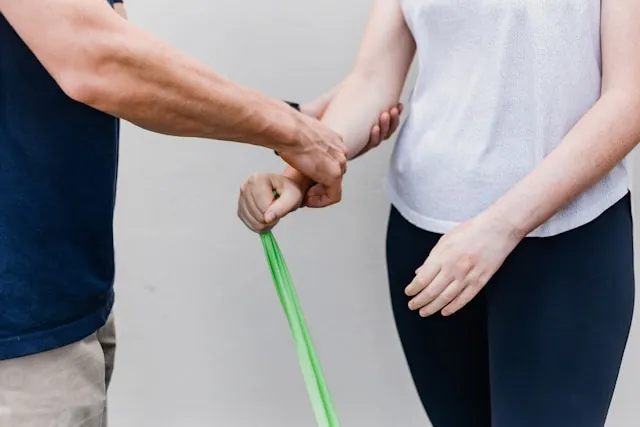
Assessment
A detailed history, then a thorough examination of movement, strength and the affected area. You leave knowing what is wrong, why it happened, and exactly what we are going to do about it.
Skiing injuries are often acute, and many heal without surgery. We diagnose accurately and rebuild the strength and control the slopes demand, before and after.

Overview
Unlike most overuse-dominated sports, skiing produces a high proportion of acute, traumatic injuries from falls, twists and equipment forces. The knee is by far the most commonly injured, with ACL and MCL injuries, followed by skier's thumb and shoulder injuries. There is also a strong prevention angle through pre-season conditioning.
Not always. Many ligament injuries are managed without surgery, and where surgery is needed the rehab that follows is what restores the joint. We establish an accurate diagnosis, screen for injuries needing referral or imaging, then follow NICE and BJSM criteria-based recovery, with objective testing guiding your return to the slope.
We treat recreational and competitive skiers, plus pre-season conditioning and post-surgical rehab, across our Soho, Liverpool Street and Marylebone clinics. Self-referral; no GP letter needed.
Why it happens
Twisting falls that load the knee, the classic mechanism for anterior cruciate ligament (ACL) tears
The ski edge catching and forcing the leg outward, straining the medial collateral ligament (MCL)
A fall onto a planted pole that forces the thumb sideways, spraining or tearing the ulnar collateral ligament (skier's thumb)
Landing on an outstretched arm or shoulder, producing AC-joint injuries and dislocations
Fatigue and deconditioning late in the day or early in the season, reducing control and raising fall risk
Insufficient pre-season leg strength and control, leaving the knee under-prepared for slope loads
A twisting fall that leaves the knee swollen or untrustworthy needs an accurate answer: ACL, MCL or something less serious. We assess, refer for imaging or a specialist opinion where warranted, and set the plan from a diagnosis rather than a hope.
Many ligament injuries recover without an operation, and for those that need one the rehabilitation afterwards is what actually restores the knee. Either way the work is the same in kind: progressive strength, control and confidence, staged against criteria.
A pole forcing the thumb sideways sprains or tears the ligament at its base. Partial injuries do well with protection then graded rehabilitation to restore pinch grip and stability; a complete tear may need repair. Early, accurate assessment decides which road you are on.
Landing on an outstretched arm or the point of the shoulder produces AC-joint injuries and dislocations. Most are managed without surgery: protection first, then progressive strengthening that returns the range and confidence to load poles and absorb the next fall.
Pre-season conditioning is one of the most effective ways to cut skiing injury risk. We build the leg, hip and trunk strength and the balance the slopes demand, tailored to your level and history. Start several weeks out and the first day feels different.
Fatigue late in the day is when falls happen, so we return you at full strength rather than roughly recovered. VALD testing measures strength and left-to-right symmetry after knee or thumb rehabilitation, and the trip gets booked when the numbers say ready.

The assessment covers a detailed history and a thorough examination of movement, strength and the affected area. We explain what we find and agree a working diagnosis and plan you understand before you leave.
You go home with a written summary and a home-exercise programme built around your diagnosis and goals, so progress continues between visits.
From pain to performance. Pain relief that lasts is not enough on its own: we rebuild the strength behind the pain so it stays gone.


You can self-refer and book directly: no GP letter needed, and every new patient can start with a free 15-minute consultation call. The same fees apply across our Soho, Liverpool Street and Marylebone clinics.
Everything starts with finding the cause. Whether the goal is a marathon start line or a week at your desk without pain, we treat what is driving the problem, then build the strength that keeps it fixed.
A detailed history, then a thorough examination of movement, strength and the affected area. You leave knowing what is wrong, why it happened, and exactly what we are going to do about it.

Hands-on manual therapy combined with a progressive, tailored exercise programme. Sports massage, dry needling, shockwave or Reformer Pilates are added where they help your specific problem.

Coached, progressive strength work restores the load tolerance your body lost, paced to where you start. This is the stage that decides whether the fix lasts.

Each follow-up reassesses you against your baseline, with VALD testing where useful, so your return to work, sport or training rests on measured readiness. Discharge happens by mutual agreement when you can manage independently.

Treatment approach
Sports physiotherapy is the core treatment: accurate diagnosis of the knee, thumb, shoulder or lower-leg injury, onward referral or imaging where needed, and a criteria-based, exercise-led rehabilitation plan for both conservatively managed and post-surgical injuries.
See treatment detail →Structured strength and control work rebuilds the quadriceps, hamstring, hip and trunk capacity the knee depends on after a ligament injury, and builds the pre-season leg strength that reduces fall and injury risk on the slopes.
See treatment detail →VALD force-plate and dynamometry testing measures strength and left-to-right asymmetry to guide return-to-slope decisions on objective criteria after ACL or thumb rehabilitation, rather than on the calendar or how the joint feels.
See treatment detail →FAQ
No. Some ACL injuries are managed without surgery through structured, exercise-led rehabilitation, while others: particularly in those returning to pivoting sports or with associated meniscal or ligament damage, are reconstructed. The decision depends on your knee, your goals and a specialist opinion. Either way, progressive rehabilitation to rebuild strength is central.
Skier's thumb is a sprain or tear of the ulnar collateral ligament at the base of the thumb, caused by a pole forcing the thumb sideways in a fall. Partial injuries are usually managed with protection then graded rehabilitation to restore grip and stability. A complete tear may need surgical repair, so accurate early assessment matters.
Yes. Pre-season conditioning is one of the most effective ways to reduce skiing injury risk. We build the leg, hip and trunk strength and the balance and control the slopes demand, tailored to your level and any previous injury. Starting several weeks before your trip gives the tissue time to adapt and build resilience.
Seek urgent care if you cannot bear weight, the knee gives way or looks deformed, a joint is clearly out of place, or you have numbness, tingling or a cold, discoloured limb. These can signal a fracture, dislocation or significant ligament injury. Contact NHS 111 or attend A&E for these; physiotherapy follows once the acute injury has been assessed.
Get Started
Physio and Performance • 111 Charing Cross Road, Soho, London WC2H 0DT
BookAppointments typically available within 1–2 weeks