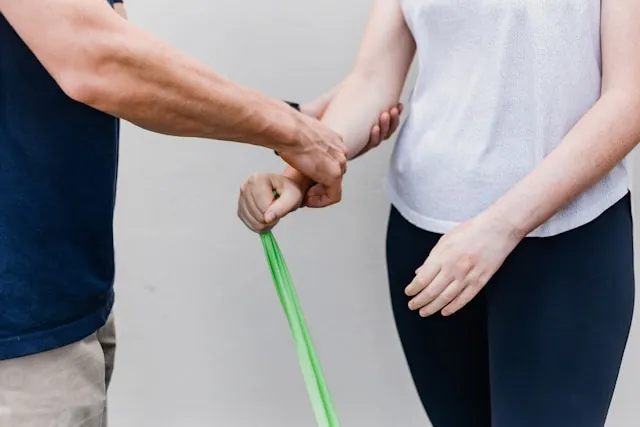
Assessment
A detailed history, then a thorough examination of movement, strength and the affected area. You leave knowing what is wrong, why it happened, and exactly what we are going to do about it.
Most running injuries are overuse you can train through with the right plan. We screen for bone stress, rebuild capacity and get you back to full mileage safely.

Overview
Running injuries are among the most common reasons active Londoners seek physiotherapy, and the great majority are overuse rather than single events. The thread is training load rising faster than the tissue can adapt, from a mileage spike, a block of speed work, or a return to full volume too soon.
Often yes, with relative rather than complete rest, once we rule out what changes the plan. We screen for the red flags that signal bone stress, then find the structure and the load behind it. NICE and BJSM support progressive loading as first-line care. We rebuild calf, hip and gluteal capacity and judge your return on objective markers.
We treat professionals, parkrunners and marathoners across our Soho, Liverpool Street and Marylebone clinics. Self-referral; no GP letter needed.
Why it happens
Sharp jumps in weekly mileage, long-run distance or intensity that rise faster than the tissue can adapt: the single biggest driver of running overuse injury
A sudden block of speed work, hill repeats or a new training surface or footwear during a marathon build-up, without an adaptation period
Strength and capacity deficits in the calf, hip and gluteal muscles, leaving the lower limb under-supported under repetitive impact
Insufficient recovery, under-fuelling or poor sleep, which lower tissue tolerance and raise the risk of bone stress
Returning to full mileage too quickly after illness, injury or a training break, leaving residual weakness
A previous running injury at the same site that was never fully rehabilitated to a return-to-running standard
Most running injuries respond better to modified loading than to a full stop. We reduce volume and intensity to what the injury tolerates, keep the rest of your training going, and build back gradually. Complete rest is usually the slower road back to full mileage.
Focal bony tenderness, pain at rest or pain on hopping changes the plan entirely, so we screen for bone-stress injury before we load anything. It is the one running problem you should not push through, and catching it early protects your season.
The story is usually in the log: a mileage jump, a sudden block of speed work or hills, new shoes or a new surface mid marathon build. We find which change outpaced the tissue, because fixing that is what stops the injury simply moving elsewhere.
Running loads the same structures thousands of times an hour, and weak calves, hips and glutes leave the knee, shin and Achilles under-protected. Targeted strength work raises the capacity of exactly those tissues, which is why it sits at the centre of the plan.
Under-fuelling, low energy availability and poor sleep lower tissue tolerance and raise bone-stress risk, especially in a heavy marathon block. With a sports dietitian in the practice, RED-S and fuelling concerns are assessed properly rather than waved at.
We judge the return on measured strength, symmetry and symptom response, with VALD testing where useful, then rebuild your mileage in structured steps. An honest answer on race day included: some injuries can be run on sensibly, and some should not be.

The assessment covers a detailed history and a thorough examination of movement, strength and the affected area. We explain what we find and agree a working diagnosis and plan you understand before you leave.
You go home with a written summary and a home-exercise programme built around your diagnosis and goals, so progress continues between visits.
From pain to performance. Pain relief that lasts is not enough on its own: we rebuild the strength behind the pain so it stays gone.


You can self-refer and book directly: no GP letter needed, and every new patient can start with a free 15-minute consultation call. The same fees apply across our Soho, Liverpool Street and Marylebone clinics.
Everything starts with finding the cause. Whether the goal is a marathon start line or a week at your desk without pain, we treat what is driving the problem, then build the strength that keeps it fixed.
A detailed history, then a thorough examination of movement, strength and the affected area. You leave knowing what is wrong, why it happened, and exactly what we are going to do about it.

Hands-on manual therapy combined with a progressive, tailored exercise programme. Sports massage, dry needling, shockwave or Reformer Pilates are added where they help your specific problem.

Coached, progressive strength work restores the load tolerance your body lost, paced to where you start. This is the stage that decides whether the fix lasts.

Each follow-up reassesses you against your baseline, with VALD testing where useful, so your return to work, sport or training rests on measured readiness. Discharge happens by mutual agreement when you can manage independently.

Treatment approach
Assessment first delivers an accurate diagnosis of the running injury: knee, Achilles, shin, heel or bone stress, then a graded loading plan that rebuilds tissue capacity and a criteria-based return to running, the first-line, best-evidenced approach across all these presentations.
See treatment detail →Targeted strength work for the calf, hip and gluteal muscles raises the capacity of the tissues that running repeatedly overloads, addressing a common underlying deficit and reducing the recurrence that drives most long-running problems.
See treatment detail →VALD force-plate and dynamometry testing gives objective strength and left-to-right asymmetry data to guide return-to-running decisions on measured criteria rather than on how the leg feels, and to track progress through a marathon build-up.
See treatment detail →FAQ
Usually not. Most running injuries respond better to modified loading than to complete rest, which only deconditions the tissue further. We typically reduce volume and intensity to a level the injury tolerates, then build back gradually. Bone stress injuries are the exception and may need a period of offloading, which your physiotherapist will guide precisely.
Both cause shin pain, but the pattern differs. Medial tibial stress syndrome tends to spread along the shin and ease as you warm up, whereas a bone stress injury is usually sharper and more focal, worsens with continued loading and can hurt at rest. Focal bony tenderness, night pain or pain on hopping prompts caution and sometimes imaging before loading.
Sometimes, depending on the diagnosis and how far the injury has progressed. Tendon and muscle problems can often be managed through a race with sensible load adjustments, whereas bone stress injuries generally should not be run on. We give you an honest read on the risk at your first session and keep updating it as the tissue responds to loading.
Seek urgent help if you cannot bear weight, the joint looks deformed, or you have numbness, tingling or a cold, discoloured limb. Contact NHS 111 if pain or swelling is severe, you suspect a bone stress injury with focal pain at rest, or there is no improvement after a few days of sensible relative rest and self-care.
Get Started
Physio and Performance • 111 Charing Cross Road, Soho, London WC2H 0DT
BookAppointments typically available within 1–2 weeks