Assessment
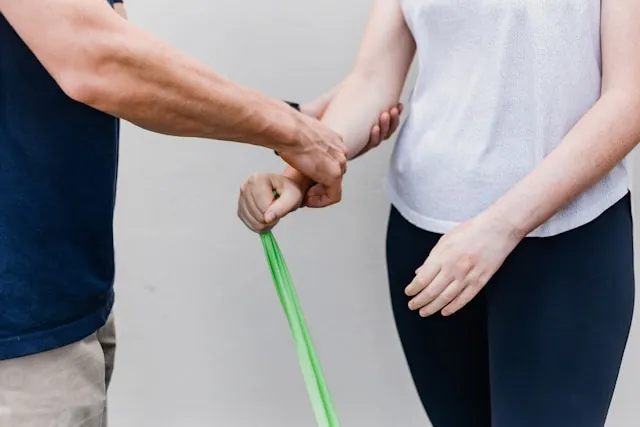
A detailed history, then a thorough examination of movement, strength and the affected area. You leave knowing what is wrong, why it happened, and exactly what we are going to do about it.
Hyrox injuries come from load and fatigue, not bad luck. We rebuild the capacity behind your shoulder, knee, back or grip and balance your running and strength work.

Overview
Hyrox alternates eight one-kilometre runs with eight heavy functional stations under accumulating fatigue, and that mix of running volume and loaded strength work produces its distinctive injuries. Almost all are load- and fatigue-related rather than single traumatic events.
Usually because load or technique outstrips the tissue, often when training favours running or strength without the other, or form fades late in a race. NICE and BJSM support graded loading as first-line care, so you rarely need a scan. We rebuild shoulder, knee, back and grip capacity and balance your running and strength volume.
We treat first-timers, competitive athletes and hybrid-fitness enthusiasts across our Soho, Liverpool Street and Marylebone clinics. Self-referral; no GP letter needed.
Why it happens
Wall balls and overhead and pressing work that load the shoulder, particularly under accumulating race fatigue
Lunges, wall-ball squats and running volume that load the knee and patellofemoral joint
Sled push and pull, carries and fatigued lifting that load the low back and hinge pattern
Sled pull, farmer's carries and sustained holds that overload the grip and forearm
Training that emphasises running or strength without preparing the other element, leaving tissue under-prepared
Technique that degrades under fatigue, concentrating load on one region late in a workout or race
Wall balls load the shoulder, sleds and carries load the back and grip, lunges and the runs load the knee. We match your pain to the stations and the training pattern producing it, because the fix starts with knowing exactly which load is responsible.
With eight stations and the runs to work with, there is nearly always a way to train while the irritated tissue recovers. We modify the aggravating stations, hold the rest of your programme, and rebuild towards full workouts as capacity returns.
Most Hyrox injuries arrive when training favours running or strength and neglects the other. We look at the whole week, then build the missing element progressively, so the hybrid demands of race day stop exposing the same gap.
Technique that is sound when fresh can fall apart eight stations in, and that is when tissues get hurt. Strength work paced past the point of comfort builds the fatigue-resistant capacity that holds your form together deep into a race.
Sled pulls, farmer's carries and holds punish the forearm, and grip is a common limiter and injury site. Progressive grip and forearm loading raises what your hands can tolerate, and we review how you spread that load across the race.
VALD force-plate and dynamometry testing shows the strength and left-to-right deficits that drive load-related injury in hybrid athletes. We use it to guide your return to full training and to check the rebuilt capacity is really there before race day.

The assessment covers a detailed history and a thorough examination of movement, strength and the affected area. We explain what we find and agree a working diagnosis and plan you understand before you leave.
You go home with a written summary and a home-exercise programme built around your diagnosis and goals, so progress continues between visits.
From pain to performance. Pain relief that lasts is not enough on its own: we rebuild the strength behind the pain so it stays gone.


You can self-refer and book directly: no GP letter needed, and every new patient can start with a free 15-minute consultation call. The same fees apply across our Soho, Liverpool Street and Marylebone clinics.
Everything starts with finding the cause. Whether the goal is a marathon start line or a week at your desk without pain, we treat what is driving the problem, then build the strength that keeps it fixed.
A detailed history, then a thorough examination of movement, strength and the affected area. You leave knowing what is wrong, why it happened, and exactly what we are going to do about it.

Hands-on manual therapy combined with a progressive, tailored exercise programme. Sports massage, dry needling, shockwave or Reformer Pilates are added where they help your specific problem.

Coached, progressive strength work restores the load tolerance your body lost, paced to where you start. This is the stage that decides whether the fix lasts.

Each follow-up reassesses you against your baseline, with VALD testing where useful, so your return to work, sport or training rests on measured readiness. Discharge happens by mutual agreement when you can manage independently.

Treatment approach
Sports physiotherapy is the core treatment: accurate diagnosis of the shoulder, knee, low-back or grip problem, a graded loading plan that rebuilds capacity, and a criteria-based return to running and loaded stations rather than discharging on how a workout felt.
See treatment detail →Structured strength and conditioning rebuilds the shoulder, knee, hip, trunk and grip capacity the Hyrox stations demand, balances running and strength volume, and builds the fatigue-resistant capacity that keeps technique intact deep into a race.
See treatment detail →VALD force-plate and dynamometry testing measures strength and left-to-right asymmetry to guide a measured, criteria-based return to full training and to flag the deficits that drive load-related injury in hybrid-fitness athletes.
See treatment detail →FAQ
Hyrox loads the shoulder through wall balls and overhead work and the low back through the sled, carries and fatigued lifting. Pain usually appears when that load: often with deteriorating technique late in a workout, exceeds what the tissue can handle. Treatment rebuilds capacity and addresses the fatigue and technique factors, not just rest.
Rarely completely. Most Hyrox injuries respond better to adjusted load than to full rest, which only deconditions you. We typically modify the aggravating stations or reduce running or strength volume to a level the tissue tolerates, then build back up. Because the event has so many components, we can usually keep you training around the injury while the tissue recovers.
Grip and forearm fatigue is common in Hyrox because the sled pull, farmer's carries and holds load the forearm heavily and repeatedly. If grip is your limiter or a source of pain, we build forearm and grip capacity progressively and review how you distribute grip load across the race, so the forearm meets the demand.
Seek urgent care if you cannot bear weight, a joint looks deformed or gives way, or you have numbness, tingling or a cold, discoloured limb. Contact NHS 111 if pain or swelling is severe or rapidly worsening. For most load-related Hyrox pain, physiotherapy is the appropriate first step rather than emergency care.
Get Started
Physio and Performance • 111 Charing Cross Road, Soho, London WC2H 0DT
BookAppointments typically available within 1–2 weeks