Assessment
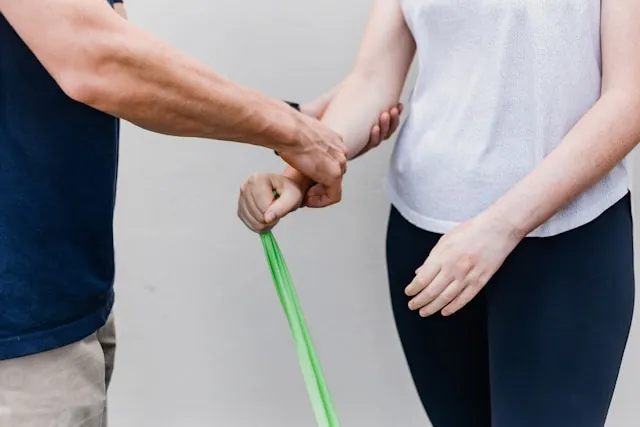
A detailed history, then a thorough examination of movement, strength and the affected area. You leave knowing what is wrong, why it happened, and exactly what we are going to do about it.
Tendons don't heal with rest, they need load. Following the BJSM consensus, we build a progressive loading plan that rebuilds a tendon that lasts.

Overview
Tendinopathy is the accurate modern term for a painful, overloaded tendon, most often the Achilles, patellar, gluteal or lateral elbow. The older word tendinitis implies inflammation, but the BJSM shows most long-standing tendon problems are changes in tendon structure from load applied faster than the tissue can adapt.
Because complete rest lets the tendon lose the capacity it needs, so the pain returns the week you go back. In line with the BJSM consensus, progressive loading is the primary, best-evidenced treatment. We assess the tendon and the overload behind it, then build a loading plan around how you train, work and move. Shockwave may be added for stubborn cases.
We treat runners, gym-goers and athletes across our Soho, Liverpool Street and Marylebone clinics. Self-referral; no GP letter needed.
Why it happens
A rapid spike in training, running mileage, or gym load that outpaces the tendon's ability to adapt
Repetitive or sustained loading of one tendon (Achilles, patellar, gluteal, lateral elbow) without adequate recovery between sessions
Strength and conditioning deficits in the surrounding muscle group, so the tendon absorbs load it is not prepared for
Returning to full training too soon after a previous injury, before the tendon has rebuilt its capacity
A sudden change in footwear, running surface, training pattern, or technique without an adaptation period
Reduced tendon tolerance associated with increasing age, certain medications, or metabolic and hormonal health factors
Most long-standing tendon pain is tendinopathy: an overloaded tendon whose structure has changed, rather than the inflammation the old word tendinitis implies. The distinction matters, because it explains why rest keeps failing you and why graded load is what rebuilds the tissue.
A tendon rarely fails without a reason. A training spike, a change of footwear or surface, or a strength deficit in the muscles around it usually sits underneath. We identify that driver at assessment, because treating the tendon while ignoring the cause invites a relapse.
Progressive loading is the primary, best-evidenced treatment for Achilles, patellar, gluteal and elbow tendinopathy, supported by the BJSM consensus. We start with what your tendon tolerates today, often isometric work, then progress through heavy-slow resistance as capacity returns.
Complete rest lets the tendon lose the very capacity it needs. We use relative rest instead: easing the aggravating loads, keeping everything else going, and adjusting week by week. Most people stay active through the whole programme.
For stubborn tendons that have not settled with first-line loading, shockwave therapy can be added in line with NICE interventional procedures guidance. We are honest about the mixed evidence: it is an adjunct alongside your loading programme, never a shortcut around it.
Tendon tissue adapts slowly, so we set realistic milestones over months rather than weeks and reassess against them. The end point is measured: strength and load tolerance back to the level your sport and life demand, so the problem does not grumble on for years.

The assessment covers a detailed history and a thorough examination of movement, strength and the affected area. We explain what we find and agree a working diagnosis and plan you understand before you leave.
You go home with a written summary and a home-exercise programme built around your diagnosis and goals, so progress continues between visits.
From pain to performance. Pain relief that lasts is not enough on its own: we rebuild the strength behind the pain so it stays gone.


You can self-refer and book directly: no GP letter needed, and every new patient can start with a free 15-minute consultation call. The same fees apply across our Soho, Liverpool Street and Marylebone clinics.
Everything starts with finding the cause. Whether the goal is a marathon start line or a week at your desk without pain, we treat what is driving the problem, then build the strength that keeps it fixed.
A detailed history, then a thorough examination of movement, strength and the affected area. You leave knowing what is wrong, why it happened, and exactly what we are going to do about it.

Hands-on manual therapy combined with a progressive, tailored exercise programme. Sports massage, dry needling, shockwave or Reformer Pilates are added where they help your specific problem.

Coached, progressive strength work restores the load tolerance your body lost, paced to where you start. This is the stage that decides whether the fix lasts.

Each follow-up reassesses you against your baseline, with VALD testing where useful, so your return to work, sport or training rests on measured readiness. Discharge happens by mutual agreement when you can manage independently.

Treatment approach
Assessment identifies which tendon is involved and the overload behind it, then delivers a progressive-loading programme with objective return-to-sport criteria: the best-evidenced treatment for Achilles, patellar, gluteal, and lateral elbow tendinopathy, supported by the BJSM consensus.
See treatment detail →Structured, progressive strength work: including isometric and heavy-slow resistance, rebuilds the tendon's load tolerance and the capacity of the surrounding muscle group, addressing the deficits that let the tendon become overloaded in the first place.
See treatment detail →For recalcitrant tendinopathies such as plantar fasciitis, calcific rotator-cuff, Achilles or patellar tendinopathy that have not resolved with first-line loading, extracorporeal shockwave therapy may be offered as an adjunct in line with NICE interventional procedures guidance; the evidence is mixed and it is never a guaranteed cure.
See treatment detail →FAQ
Tendinopathy is the accurate term; tendinitis is largely outdated. "Tendinitis" implies inflammation, but research summarised by the BJSM shows most long-standing tendon problems are not primarily inflammatory: they are overload-driven changes in tendon structure. This matters for treatment: rest alone rarely works, whereas progressive loading rebuilds the tendon's capacity over time.
Progressive, graded loading is the primary, best-evidenced treatment, supported by the BJSM consensus and current physiotherapy best practice. A structured programme using isometric and heavy-slow resistance gradually rebuilds the tendon's tolerance to load. Manual therapy can help manage pain alongside loading, but exercise is the core of recovery, not an optional extra.
It can help some recalcitrant cases: such as plantar fasciitis, calcific rotator-cuff, Achilles or patellar tendinopathy, where first-line loading has not resolved symptoms. NICE interventional procedures guidance supports its use as an adjunct, but the evidence is mixed. We offer it alongside loading, never as a standalone cure, and discuss whether it is right for you.
Usually not. Complete rest may ease pain briefly, but it lets the tendon lose capacity, so symptoms return when you resume activity. The evidence supports relative rest: temporarily reducing aggravating load while progressively rebuilding tolerance through structured exercise. Your physiotherapist guides the right amount of load for your stage of recovery.
Tendon tissue adapts gradually, so recovery is rarely quick: often three months or more of consistent, progressive loading, sometimes longer for the Achilles or gluteal tendons. We set realistic milestones at your first appointment and reassess regularly. Seek urgent medical advice if you suspect a sudden tendon rupture with severe pain or weakness.
Get Started
Physio and Performance • 111 Charing Cross Road, Soho, London WC2H 0DT
BookAppointments typically available within 1–2 weeks